A Fun (and True) Fact About the Elder Futhark Runes


If you’ve ever wondered whether the Elder Futhark runes are actually ancient — or whether they’re a modern invention dressed up in mystery — here’s a fun and reassuring fact:
We still have the stones.
Not metaphors.
Not manuscripts copied centuries later.
Actual carved stones.
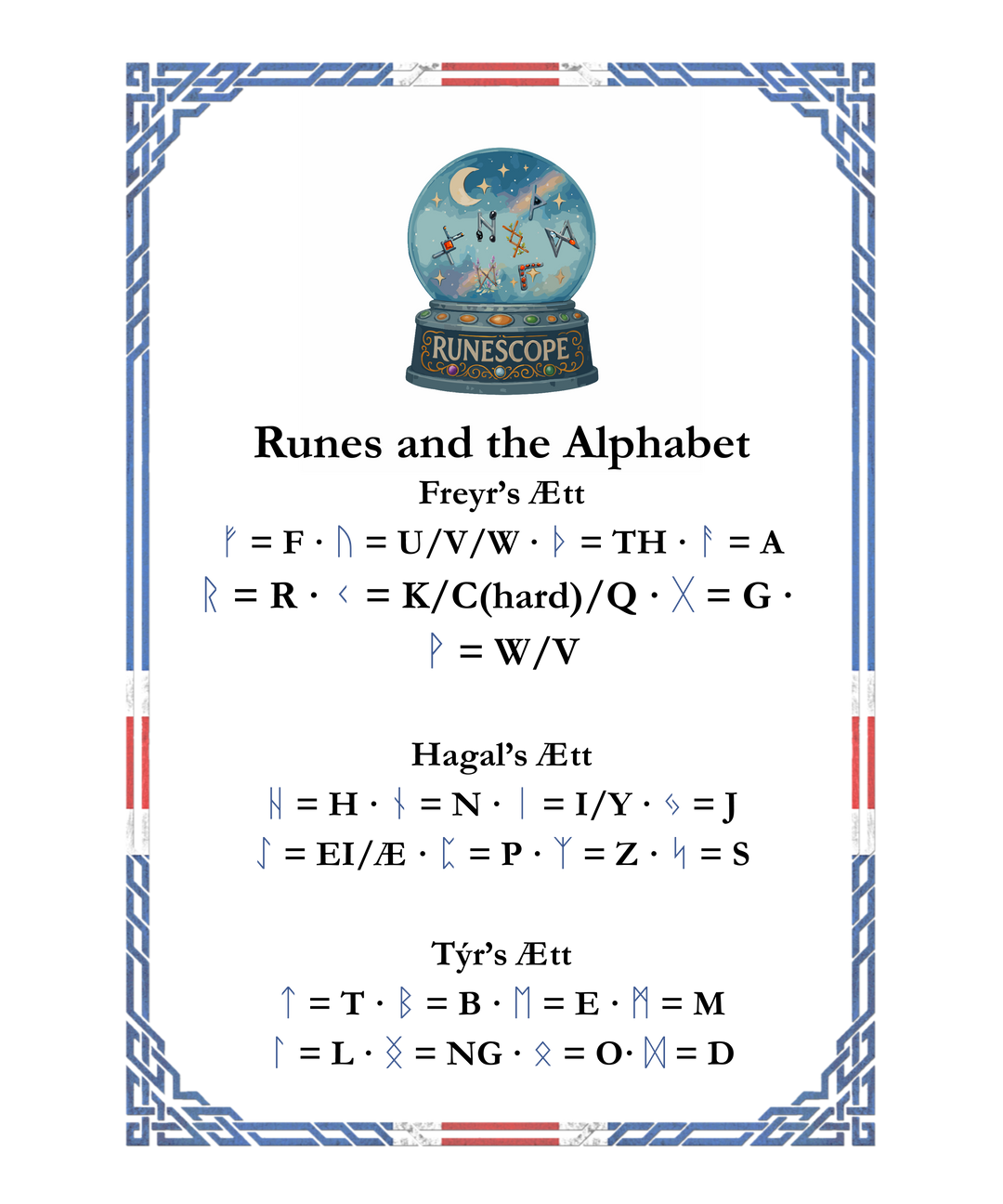
The Elder Futhark is the oldest known runic alphabet, consisting of 24 characters used by Germanic peoples across Northern Europe roughly between the 2nd and 8th centuries CE. And we know this not because someone wrote it down later — but because the runes were literally carved into wood, stone, bone, and metal.
One of the most important archaeological finds is the Kylver Stone, discovered on the Swedish island of Gotland. It dates to around the 5th century and contains the complete sequence of all 24 Elder Futhark runes, carved in order — essentially a stone-age alphabet list.
You can view its historical documentation here:
https://en.wikipedia.org/wiki/Kylver_Stone
This matters because it confirms that the rune set wasn’t invented piecemeal or symbolically later on — it existed as a coherent writing system long before medieval manuscripts or modern interpretations.
Runes Weren’t Just Symbols — They Were Language
Another fascinating (and very human) detail: the runes were used for everyday purposes as well as ceremonial ones.
Take the Tune Stone in Norway, for example. Its inscription is one of the longest known Elder Futhark texts and appears to be a memorial — essentially an early gravestone inscription. It tells us that runes were used to record names, relationships, and legacy.
You can explore the Tune Stone here:
https://en.wikipedia.org/wiki/Tune_stone
Similarly, the Gummarp Runestone in Sweden contains a short Elder Futhark inscription that shows how runes were used to mark power, protection, or ownership — a reminder that writing and symbolism were closely linked in early cultures.
https://en.wikipedia.org/wiki/Gummarp_Runestone
These aren’t abstract spiritual claims; they’re physical artifacts held in museums and studied by historians.
So Where Does Modern Rune Work Fit In?
Historically, runes functioned both as letters and as symbols. Each rune had a sound value, a name, and an associated concept — which made them particularly suited to layered meaning. That dual role is precisely why they continue to resonate today.
Modern rune practices, including personalized rune charts and interpretive systems like RuneScope, don’t claim to replicate ancient rituals exactly. Instead, they build on the documented structure of the Elder Futhark while applying it to reflection, timing, and personal context — much like astrology evolved from early astronomy.
For readers who want a clear, accessible overview of the meanings traditionally associated with each rune, this guide offers a solid starting point:
https://www.pagangrimoire.com/elder-futhark-rune-meanings/
And for broader cultural symbolism and interpretation, this article provides helpful context without drifting into fantasy:
https://norse.mythologyworldwide.com/the-symbolism-of-the-elder-futhark-understanding-each-rune/
A Final Thought
The most interesting thing about the Elder Futhark isn’t that it feels mysterious — it’s that it doesn’t need to be.
The runes are real.
The stones still exist.
The symbols have names, sounds, and histories.
What we do with them today is interpretation — not invention.
And that’s where the conversation becomes personal.
At RuneScope, we work with the Elder Futhark as a historically grounded system — and use it as a framework for reflection, timing, and insight in a modern world.